


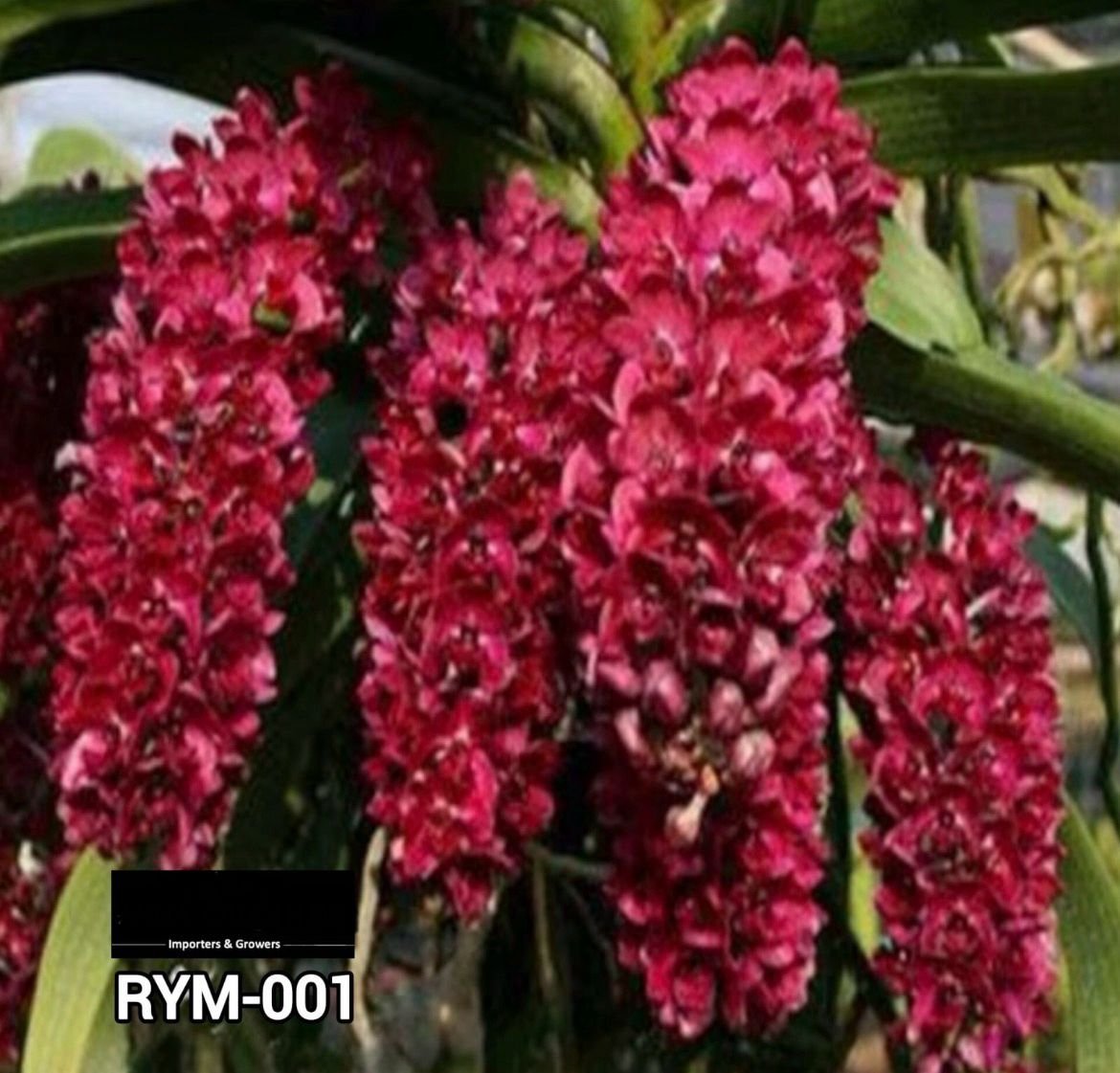
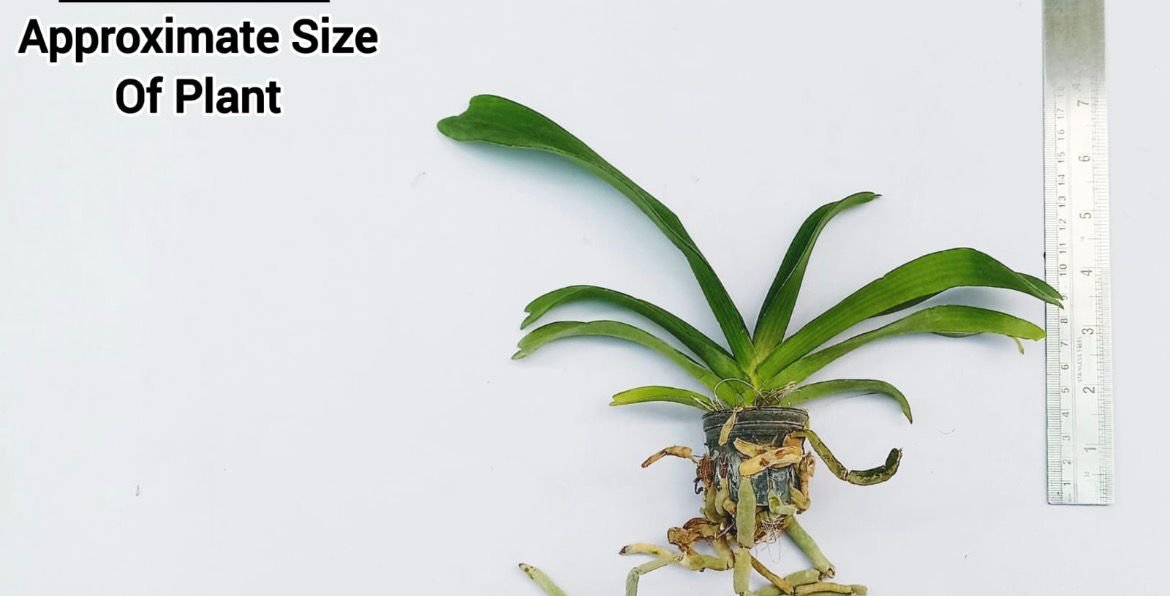
Rynchostylis medium size plant – RYM 001
Original price was: ₹1,999.00.₹725.00Current price is: ₹725.00.
selling size shown in the last image
Additional information
Guaranteed safe checkout


Description
Description
### 📋 Quick Reference: Rhynchostylis Care at a Glance
| Aspect | Key Requirement |
| :— | :— |
| ☀️ **Light** | **Bright, indirect light.** Unlike Vandas, they cannot handle harsh, direct sun . |
| 💧 **Water** | **Frequent.** If grown bare-root, water daily. They like consistent moisture but hate soggy conditions . |
| 💦 **Humidity** | **High (60-80%).** This is non-negotiable for healthy growth . |
| 🌡️ **Temperature** | **Warm.** Maintain 20°C to 30°C (68°F to 86°F). Protect from anything below 13°C (55°F) . |
| 🌱 **Potting** | **Bare-root in baskets.** They need their thick, fleshy roots exposed to the air to prevent rot . |
| 🌿 **Feeding** | **Heavy feeder.** Fertilize every 1-2 weeks during the growing season with a balanced orchid fertilizer . |
—
### 🌸 Detailed Care Instructions for Alan’s Garden
The most important thing to remember is that Rhynchostylis are **monopodial epiphytes**. In nature, they grow on tree branches with their roots completely exposed. They do not grow in soil .
#### Light: Bright but Shaded
Rhynchostylis need **bright, indirect light** to bloom. Think of the dappled light under a tree canopy.
– **Indicator:** Leaves should be a light, bright green. Dark green leaves usually mean the plant needs more light .
– **Placement:** An east-facing window or a south window with a sheer curtain is perfect. If the leaves start turning yellowish or feel hot to the touch, the sun is too strong.
– **Alan’s Tip:** This is a key difference from Vanda orchids. *Rhynchostylis* is more sensitive to direct sun and will scorch easily .
#### Watering & Humidity: The High-Moisture Duo
High humidity is arguably more important than watering. Without 60-80% humidity, the roots will dry out too quickly and the plant will suffer .
– **Watering Method:** The best way is the **soak and dry** method. Submerge the roots in a basin of water for a few minutes, let them soak, then hang the basket up to drain completely .
– **Frequency:** If the roots are bare in a basket, you may need to water **daily** in warm weather . If you use a coarse bark mix in a pot, water when the media is nearly dry (usually every 5-7 days) .
– **Humidity Boost:** Use a humidifier or mist the aerial roots daily (but avoid getting water pooled in the crown, or center of the leaves, which can cause rot).
#### Potting & Mounting: Bare Roots Are Best
Because their roots are prone to rot if left wet, standard potting mix is a death sentence.
– **Alan’s Garden Setup:** The best way to grow them is in a **slatted wooden or plastic basket** with **no potting mix** at all . This allows the roots to grow through the sides and get maximum airflow.
– **Alternative:** If you prefer a pot, use a coarse orchid bark mix (like for Vandas) in a clay pot with large drainage holes. However, baskets are strongly preferred .
#### Temperature: Keep It Warm
These are true tropical plants that do not like the cold.
– **Ideal Range:** Keep them between 20°C and 30°C (68°F to 86°F) .
– **Winter Warning:** Never let the temperature drop below **13°C (55°F)** . If Alan’s garden gets cool winters, this orchid must be moved indoors to a warm spot.
#### Fertilizing: Feed Frequently
Since they are watered heavily and grow in materials that hold no nutrients, you must supplement.
– **Schedule:** Feed every 1 to 2 weeks during the active growing season (spring through summer) .
– **Fertilizer Type:** Use a **balanced orchid fertilizer** (like a 20-20-20 or 30-10-10) diluted to half-strength . You can add it to the water during your regular soaking routine.
—
### 🐛 Common Issues & How to Fix Them
| Problem | Likely Cause | Solution for Alan’s Garden |
| :— | :— | :— |
| **No Flowers / Weak Blooms** | Not enough light | Move the plant to a brighter spot with indirect sun. This is the most common reason for bloom failure . |
| **Yellowing, Mushy Roots** | Root rot (too much water / no air flow) | Immediately remove rotten roots. Repot into a basket with no medium to increase air flow. Water less frequently. |
| **Leaves Turning Yellow & Crispy** | Sunburn | The light is too harsh. Move the plant further from the window or add a shade cloth . |
| **Leaf Tips Turning Brown** | Low humidity or salt build-up | Increase humidity using a humidifier. Flush the roots with plain water once a month to wash away excess fertilizer salts. |
| **Sticky Leaves / Webbing** | Spider mites, aphids, or mealybugs | Wipe leaves with soapy water or use a horticultural oil. These pests love dry air, so high humidity helps prevent them . |
### 🎯 Final Tips for Success in Alan’s Garden
1. **Airflow is your best friend.** Because the humidity needs to be so high, you need a gentle fan or an open window to keep the air moving. Stagnant, wet air will cause fungus.
2. **Watch for the Winter Rest.** While they don’t have a hard dry dormancy like a Catasetum, they do slow down in winter. Reduce watering slightly (e.g., every 2-3 days instead of daily) and stop fertilizing until spring.
3. **The Reward is Worth the Effort.** Once established, a Rhynchostylis will produce thick, pendulous spikes covered in dozens of fragrant flowers. They are truly a collector’s piece that will become the pride of Alan’s garden.
Specifications
- Lorem ipsum dolor sit amet
- Praesent vitae justo id velit
- Duis sed nisi rhoncus, fringilla turpis


Reviews
There are no reviews yet.